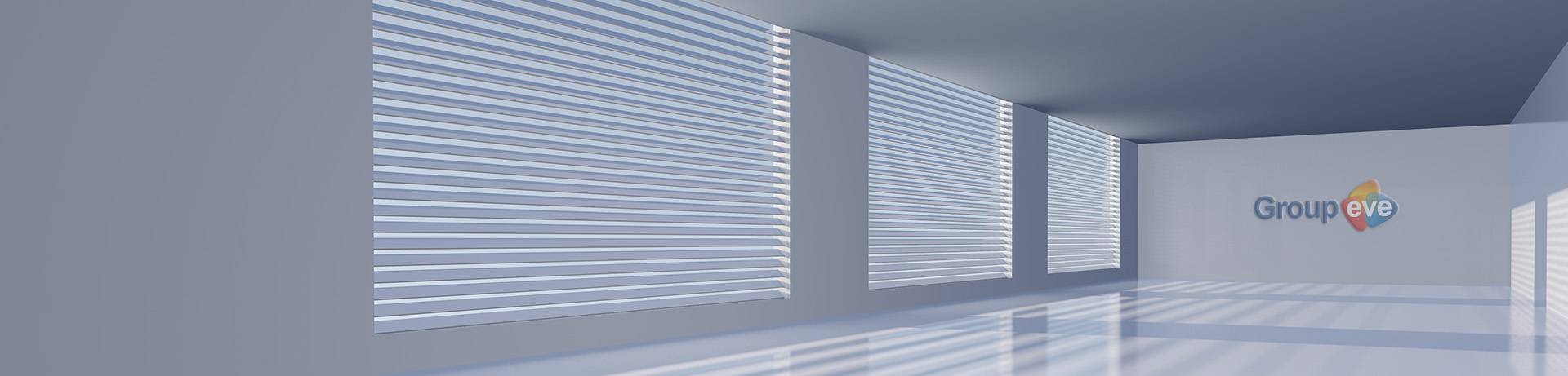
Window Covering Expectations Are Changing in Residential and Commercial Spaces.Modern interior projects increasingly require window covering systems that can balance daylight control, privacy management, and aesthetic consistency. Traditional curtains and blackout solutions often limit natural light or create enclosed indoor environments, especially in compact urban spaces.As a result, zebra blinds fabrics are gaining attention in residential, hospitality, and office applications due to their dual-layer light control structure and flexible visual performance.
Why Dual-Layer Structures Matter in Zebra Blinds Fabrics
Unlike conventional roller shades, zebra blinds fabrics combine alternating sheer and solid fabric bands within a layered structure. This design allows users to adjust alignment between opaque and translucent sections, creating different lighting and privacy conditions throughout the day.
The structure is commonly used in:
Residential living rooms/Apartment interiors/Office meeting spaces/Hospitality guest rooms
Compared with single-layer shading materials, zebra blinds systems provide greater flexibility between open visibility and privacy protection.
Material Composition Influences Long-Term Stability
In large-format window applications, fabric stability becomes an important factor affecting operational smoothness and appearance consistency.
Many zebra blinds fabrics use composite structures combining polyester and PVC materials to support dimensional stability and maintain flatness during repeated operation.
Typical technical parameters may include:
31% Polyester & 69% PVC composition/Thickness around 0.55mm ±5%/Width up to 3 meters/Standard roll length of 30 meters
These specifications are commonly selected for commercial and residential roller shading systems requiring stable weaving structures over extended use cycles.


UV Protection and Light Diffusion in Daily Applications
One of the practical concerns in high-sunlight environments is prolonged UV exposure inside interior spaces. Continuous sunlight may contribute to fading on flooring materials, upholstered furniture, and decorative surfaces.Certain zebra blinds fabrics provide approximately 95% ultraviolet blocking performance while still allowing partial daylight transmission. Combined with openness structures around 5%, this helps support balanced indoor lighting conditions without fully blocking natural light.For west-facing windows and glass façade interiors, these features are frequently considered during shading system selection.Fire Safety and Environmental Standards Are Becoming Key Selection Criteria
Commercial and public projects increasingly require shading materials that comply with fire safety and environmental standards.
Some zebra blinds fabrics are manufactured to meet:
GB B1 fire-retardant standards/Oeko-Tex Standard 100 certification/GREENGUARD indoor air quality requirements
These certifications are often evaluated in office buildings, hospitality projects, educational facilities, and green building applications where indoor environmental quality is a project requirement.
Zebra Blinds Fabrics Are Evolving Beyond Decorative Use
Window covering systems are no longer selected based only on color or appearance. Architects, designers, and project managers are increasingly evaluating fabrics based on measurable technical performance, including:
UV management/Light diffusion/Fabric stability/Fire safety compliance/Environmental certifications
As building standards continue evolving, zebra blinds fabrics with stable structural parameters and verified technical specifications are becoming increasingly relevant in modern interior shading systems.
Contact Person: Ansen He
WhatsApp/WeChat: +86 18981870029
E-mail: ansen@groupeve.com
Post time: May-09-2026